
STEM Engineering Curriculum for Elementary Grades K-5
This guide presents an example of a comprehensive, grade-by-grade engineering curriculum for elementary educators. It outlines a progressive sequence of hands-on STEM activities that build upon foundational concepts while integrating language arts and mathematics standards. Each grade level introduces age-appropriate engineering challenges that develop critical thinking, problem-solving skills, and scientific understanding through engaging, creative projects.

Kindergarten: Introduction to Engineering Basics
Core Concepts
Kindergarteners begin their engineering journey by exploring fundamental concepts of gravity, balance, and stability. Through playful building activities, students discover how objects interact with gravity and what makes structures stand or fall.
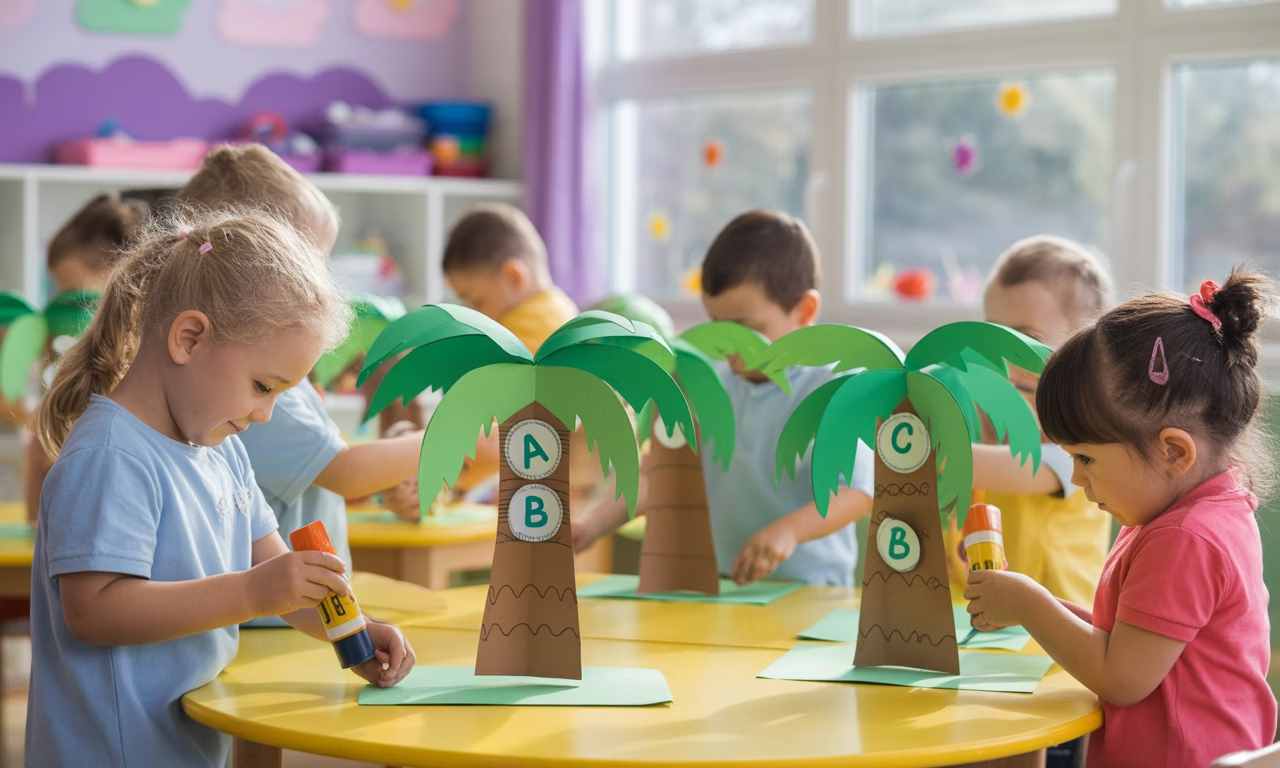
Example Lesson: Chicka Chicka Boom Boom Tree
Students identify the problem in the book.
Students identify parts of a tree, build trees that can balance letters and practice counting with one to one correspondence. This activity introduces basic engineering principles while reinforcing letter recognition and counting skills.
Students decorate paper rolls with "coconuts" containing letters of their name. This activity introduces basic writing skills and fine motor skills such as cutting, gluing, and pasting.
Standards Integration
Science: K-PS2-1 (pushes/pulls), K-2-ETS1-1 (ask, imagine)
ELA: CCSS.ELA-LITERACY.RL.K.2 (retelling)
Math: CCSS.MATH.CONTENT.K.CC.B.4-5 (counting and correspondence)

1st Grade: Building Structures
Core Concepts and Learning Progression:
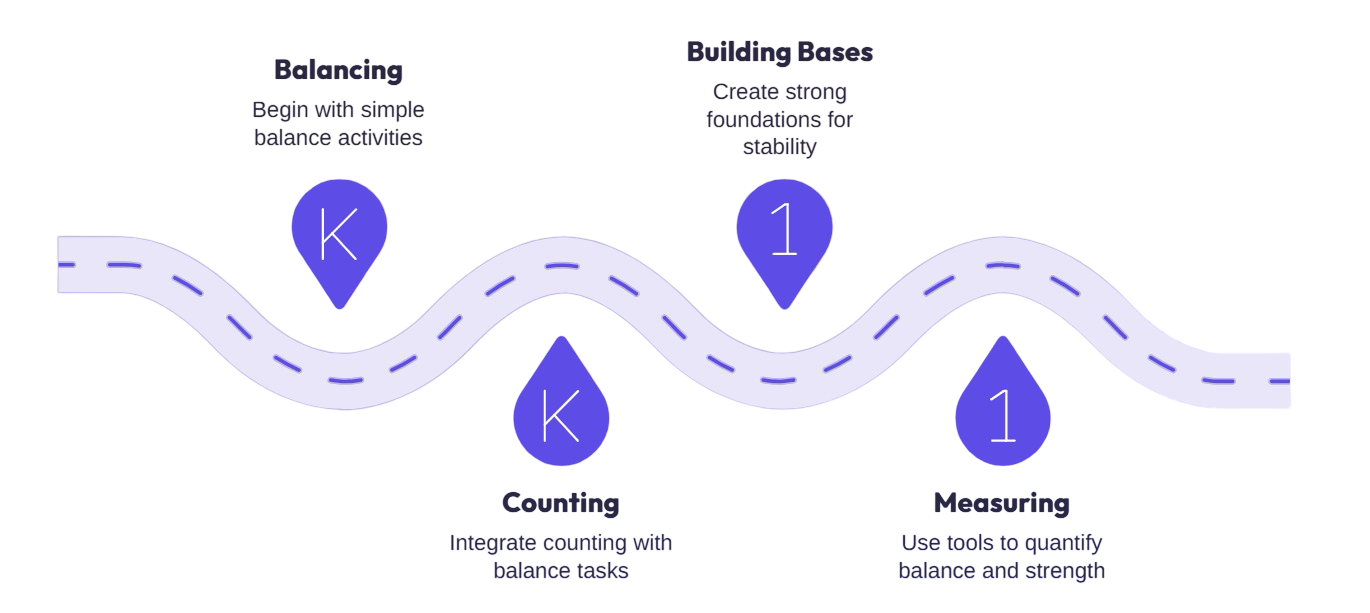
First grade engineering builds upon kindergarten concepts with more challenging building materials and techniques. For example, students go from balancing and counting to creating strong bases to create balance and measuring.
Standards Integration: K-2-ETS1-2 (model/design), PS4-1 (light), K-2-ETS1-3 (testing), and CCSS.ELA-LITERACY.RL.1.3 (character/event description).
Example Unit:
Using the Iggy Peck Architect book connection inspires students to think like engineers while developing key standards: K-2-ETS1-2 (model/design), PS4-1 (light), K-2-ETS1-3 (testing), and CCSS.ELA-LITERACY.RL.1.3 (character/event description).
Index Card Towers
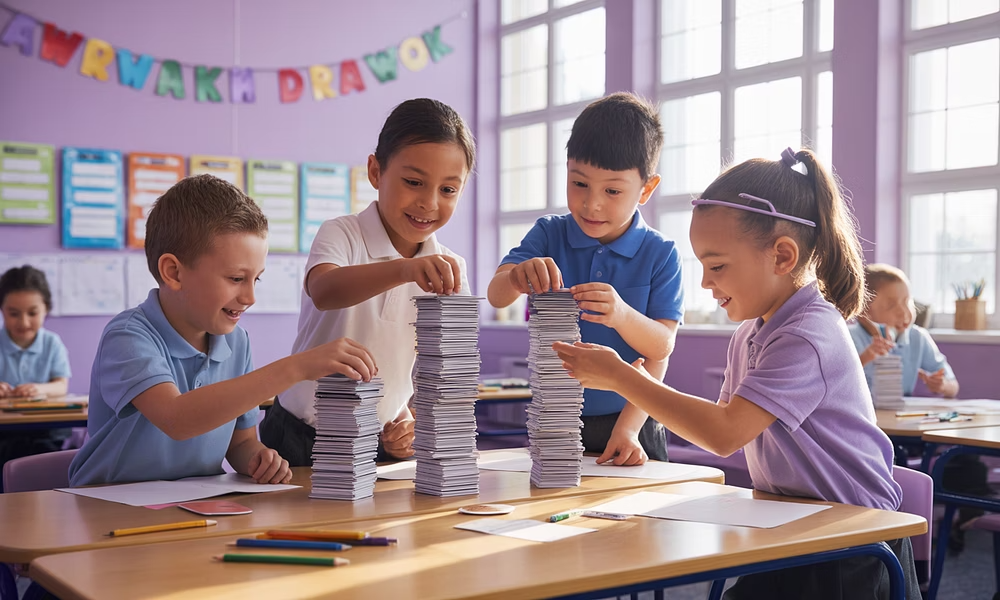
Students work in teams to build the tallest, most stable towers using only index cards. This challenge introduces concepts of base stability and structural integrity while promoting teamwork.
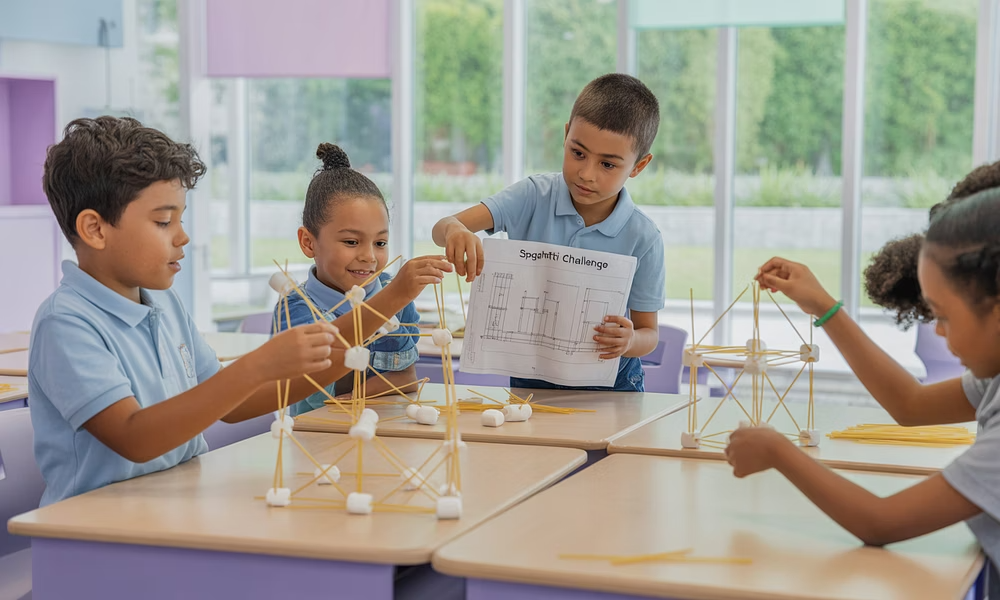
Spaghetti & Marshmallow Structures
Using spaghetti as support beams and marshmallows as connection points, students experiment with different structural designs while learning about material properties and gravity.
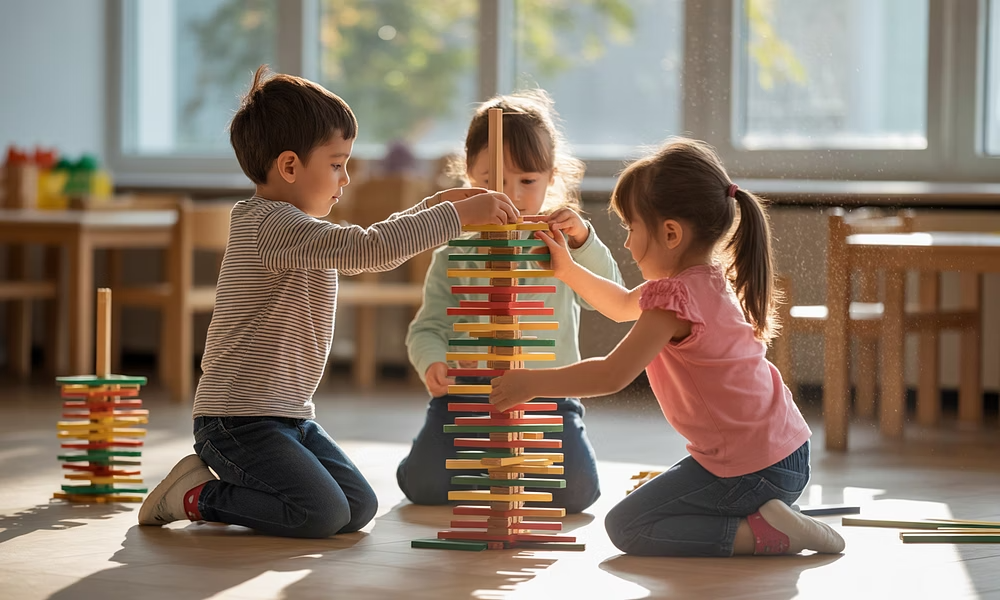
Keva Plank Construction
With Keva planks, students explore balance and symmetry while creating increasingly complex structures, developing spatial reasoning skills and understanding center of gravity.
2nd Grade: Shapes and Structural Strength
Core Concepts and Learning Progression
Second graders advance to exploring how different shapes serve specific structural purposes. Students discover through hands-on testing that triangles provide strength in bridges, while cylinders effectively support weight in structures like chairs.
Standards Integration:
2-PS1-2 (material properties) and K-2-ETS1-3 (comparing solutions).
Example Units
Seismic Shake Tower Challenge
Students build towers designed to withstand simulated earthquakes, applying their knowledge of strong shapes and stable bases. This engineering challenge connects to standards 2-PS1-2 (material properties) and K-2-ETS1-3 (comparing solutions).
Goldilocks Chair Design
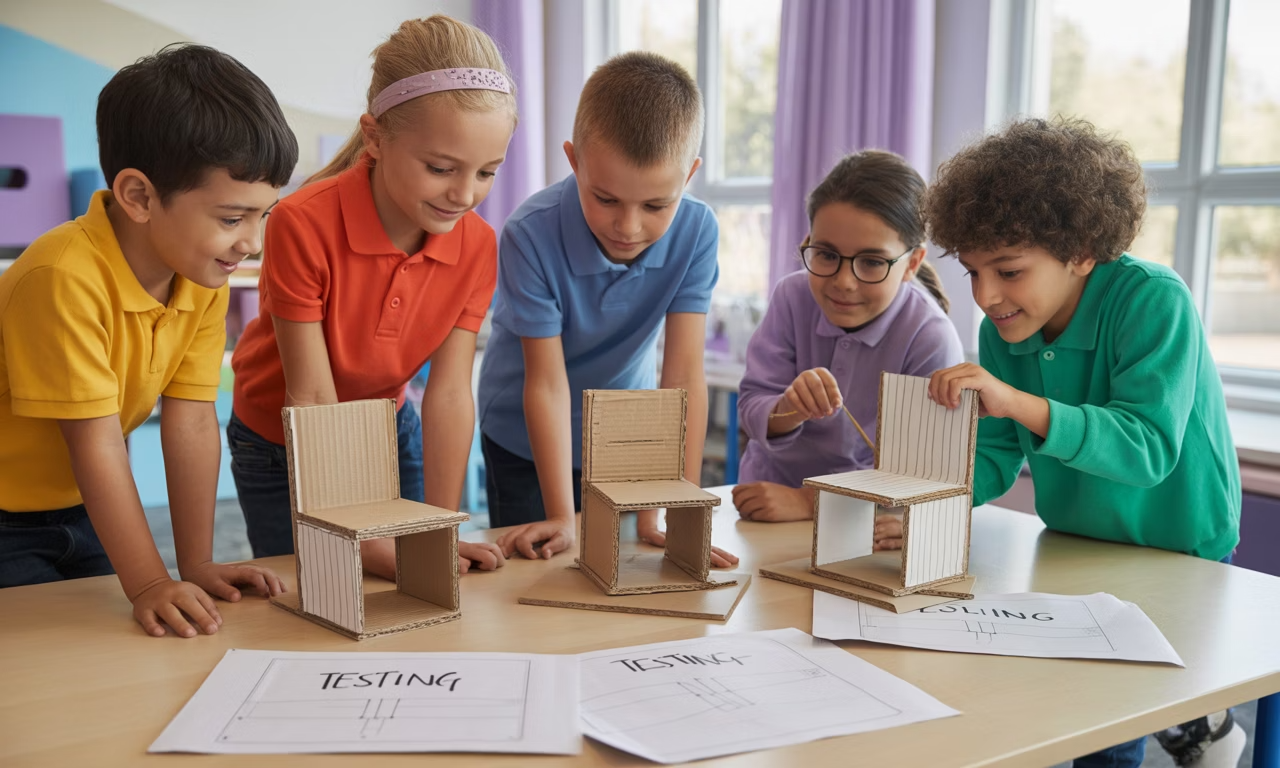
Inspired by "Goldilocks and the Three Bears," students design and build chairs that must support weight (bears of different sizes). This project allows for direct comparison of shapes and materials while integrating literacy standards.

3rd Grade: Forces and Motion
Core Concepts and Learning Progression
Third grade engineering expands beyond static structures to explore dynamic systems. Students engineer more advanced constructions such as roller coasters and LEGO derby cars, experimenting with forces beyond gravity. This grade level introduces critical physics concepts including potential and kinetic energy, air resistance, and friction.
Standards Integration: 3-PS2-1 and 3-PS2-2 (forces & motion), while developing engineering skills through 3-5-ETS1-1 (problem definition) and 3-5-ETS1-3 (testing & iteration). Students practice explaining their ideas with supporting details (CCSS.ELA-LITERACY.SL.3.4) as they present their designs.
Example Units

Roller Coaster Engineering
Students design and build paper roller coasters with hills, loops, and turns. They predict and observe how potential energy converts to kinetic energy as marbles travel the track, making adjustments to improve performance.

LEGO Derby Cars
Building on motion concepts, students construct LEGO vehicles that must travel down ramps. They test variables like wheel size, weight distribution, and aerodynamics to maximize distance and speed.

Energy Transfer Investigations
Through various station activities, students explore how energy transfers between objects, reinforcing understanding of Newton's laws of motion in accessible, hands-on ways.
4th Grade: Electrical Engineering
Core Concepts and Learning Progression
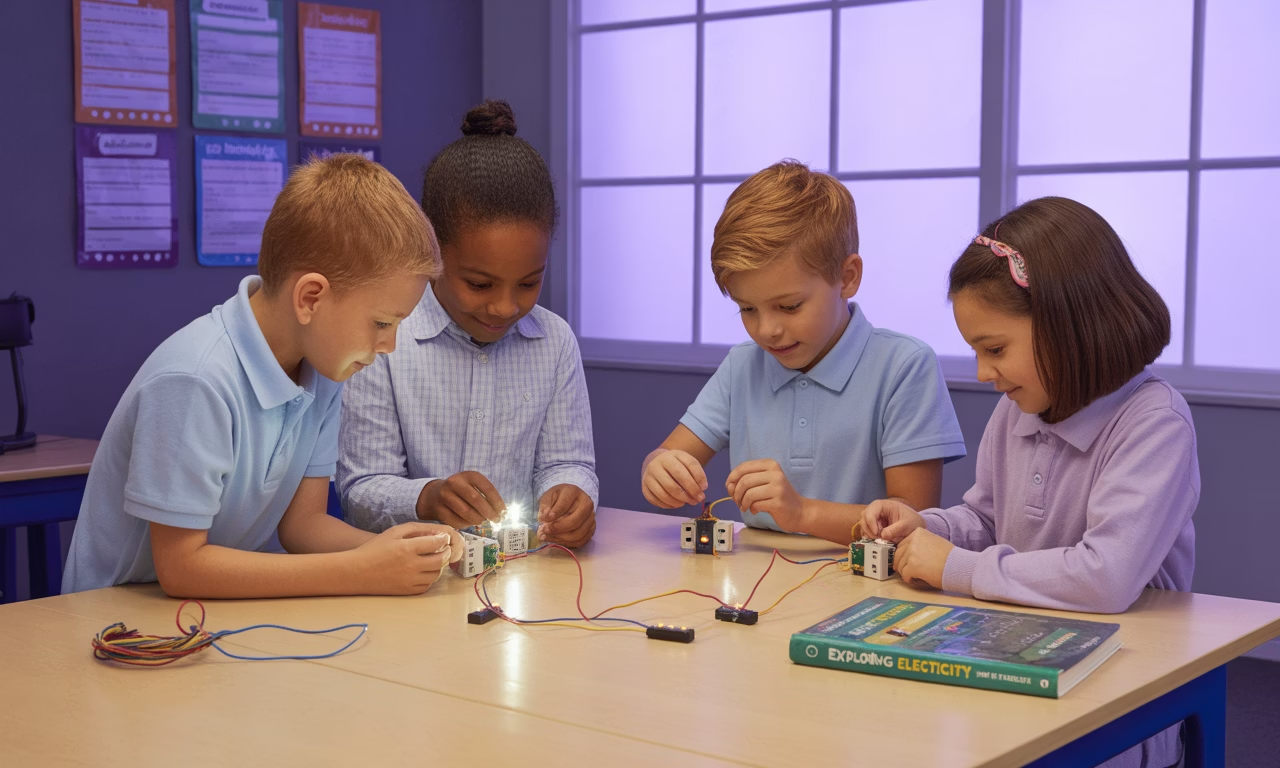
Fourth grade marks an exciting transition as they can begin to incorporate simple abstract and complex concepts into their engineering projects. Students begin to learn about electricity fundamentals like open/closed circuits, switches, conductors, insulators, and energy conversion. In addition students also begin to learn about the different types of energy such as wind, solar, nuclear etc.
Standards Integration
These activities support science standards 4-PS3-4 (energy transfer) and 4-PS3-2 (energy conversion), while developing writing skills through documentation (CCSS.ELA-LITERACY.W.4.2) and measurement applications (CCSS.MATH.CONTENT.4.MD.A.2).
Example Activities and Units
Creating basic circuits with LEDs, batteries, and switches
Designing conductive and insulating pathways
Building practical applications like flashlights and alarms
Integrating circuits into creative builds (e.g., light sabers)
Introduction to physical computing with Makey Makeys

5th Grade: Aerospace Engineering
Core Concepts and Learning Progression
Fifth grade engineering represents the culmination of the elementary engineering journey. Students apply all previously learned concepts of forces, motion, and different types of energy to explore other principles such as Newton's 3 Laws, Bernoulli's Principal, and Boyle's Law.
Standards Integration
Standards 5-PS2-1 (gravity), 3-5-ETS1-1/2/3 (engineering design process), and 5-PS1-3 (energy in systems). Students experience the full engineering design cycle while witnessing their work take place in real life through projects such as the ones below.
Example Units and Activities
High Altitude Balloon Launch
Students research aerospace concepts, Newton's Laws, and atmospheric layers. They develop hypotheses about how objects behave at different altitudes and plan their balloon payload.
Launch Execution
Students participate in balloon preparation, inflation, and launch, tracking the balloon's journey and collecting real-time data during flight.
Data Analysis
After recovery, students analyze collected data and imagery, creating multimedia presentations to communicate their findings and connecting to standards CCSS.ELA-LITERACY.SL.5.5 and CCSS.MATH.CONTENT.5.MD.B.2.
Launch Execution
Students participate in balloon preparation, inflation, and launch, tracking the balloon's journey and collecting real-time data during flight.
Teacher Tips
Implementation Recommendations
Begin each unit with a literature connection or real-world problem to establish context
Allocate sufficient time for the full engineering process, including multiple testing/improvement cycles
Document student work through photos, videos, and student reflections
Create engineering journals for students to record observations and design iterations
Establish clear classroom routines for materials management and cleanup
Consider culminating events like engineering showcases for parents and school community
The most successful engineering lessons allow students to fail, reflect, and improve. Creating a classroom culture that celebrates the iteration process is essential to developing true engineering mindsets.